Warehouse automation is no longer something reserved for enormous, purpose-built distribution centres.
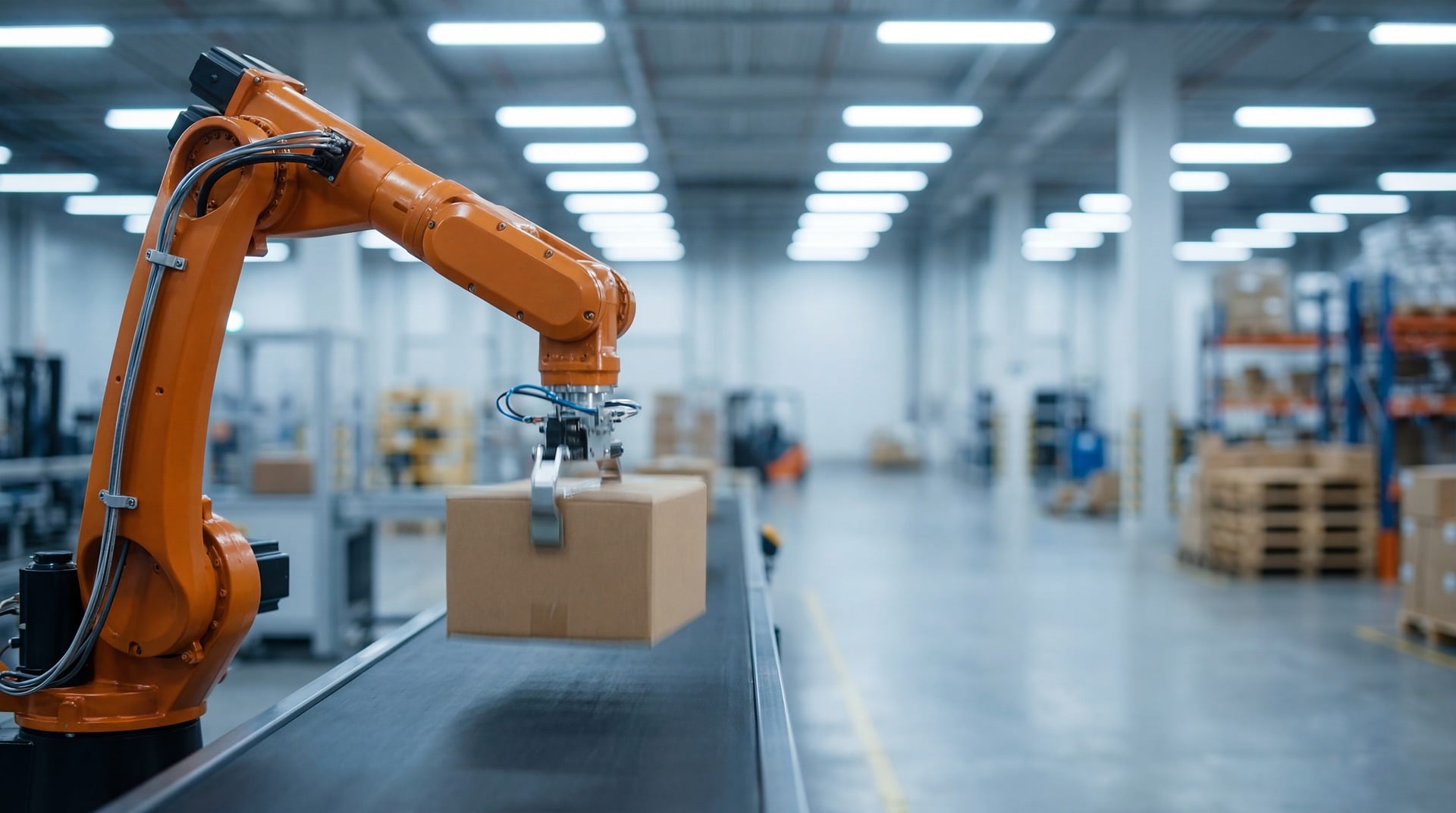
Robots are becoming a much more common sight across warehouse and fulfilment operations – and investment is continuing to grow.
The Wall Street Journal recently reported that rising labour costs and increasing expectations for faster deliveries are encouraging logistics businesses to automate more warehouse operations.
According to figures cited by the publication, North American companies ordered nearly 18,000 robots worth approximately $1.2 billion during the first half of 2026.
But this isn’t simply a US trend.
Here in the UK, labour availability, rising operating costs, limited warehouse space and growing customer expectations are also encouraging businesses to look seriously at automation.
From autonomous mobile robots (AMRs) and automated guided vehicles (AGVs) to robotic picking systems and automated forklifts, warehouse technology is developing quickly.
But before investing in the robots, there’s another important question warehouse operators need to ask:
Is the warehouse itself ready for them?
Automation Doesn’t Fix a Poor Warehouse Layout
It’s tempting to think technology can solve operational inefficiencies. Sometimes it can. But automation still operates within the physical constraints of your warehouse.
If your current operation suffers from:
- Congested aisles
- Poorly positioned stock
- Inefficient routes
- Underused storage space
- Regular racking damage
- Poor separation between different traffic types
adding automation doesn’t automatically remove those problems. In some cases, it can expose them.
A route that is inefficient for a forklift driver may still be inefficient for an autonomous vehicle.
Before deciding what technology a warehouse needs, businesses should understand the operational problem they’re actually trying to solve.
Racking and Automation Need to Work Together
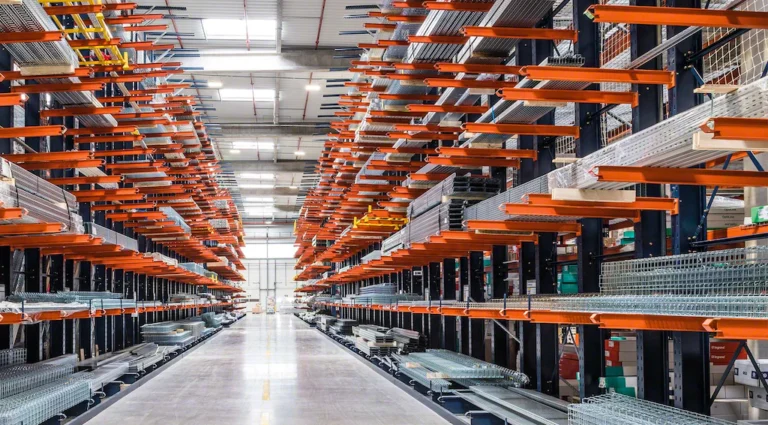
Warehouse racking has traditionally been designed around people, forklifts and pallet movements.
Automation can change those requirements.
Different technologies may require different aisle widths, access points, clearances, floor conditions and picking configurations.
The location and orientation of stock can also become increasingly important when automated equipment is expected to interact consistently with the storage system.
That’s why warehouse design should form part of the automation conversation from the beginning – rather than being considered once the technology has already been selected.
Older Warehouses Aren’t Necessarily Excluded
One of the interesting developments in warehouse robotics is increased flexibility. Automation doesn’t always require an entirely new purpose-built distribution centre.
Autonomous mobile robots and other flexible systems can increasingly be introduced into existing operations, allowing businesses to automate selected processes rather than redesigning an entire facility at once.
For operators in existing buildings, that’s potentially significant.
But it makes understanding the current warehouse even more important.
Before introducing automation, consider:
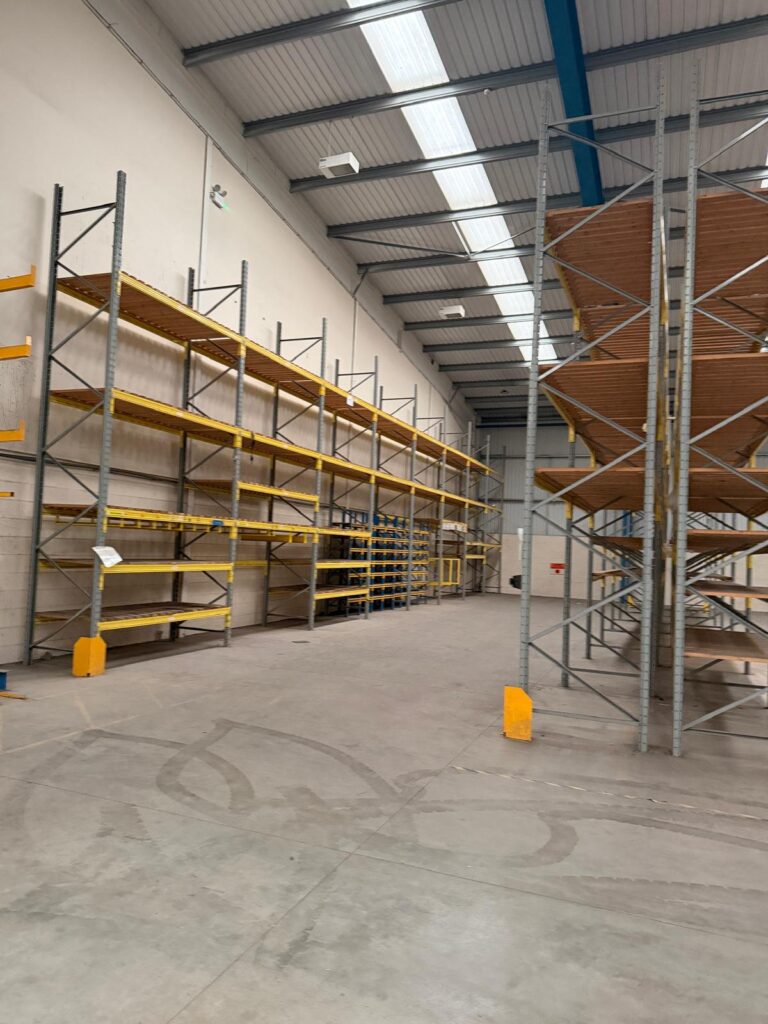
- Is the existing racking configuration suitable?
- Are travel routes logical?
- Is there enough clearance?
- Are floors and access routes appropriate?
- Where will people and automated equipment interact?
- Could the current layout be improved before technology is introduced?
Automation Makes Space Planning More Important – Not Less
UK warehouse space remains valuable.
Automation offers businesses opportunities to increase productivity, but warehouse operators still need to make the best possible use of their physical footprint.
That could involve increasing storage density, reviewing beam configurations, using available height more effectively or rethinking how fast- and slow-moving products are positioned.
The objective should be to create an operation where the building, racking, technology and people work together.
What About Warehouse Safety?
Automation can potentially reduce some manual tasks and vehicle movements, but it introduces different considerations too.
People, forklifts, AMRs and other automated systems may increasingly operate within the same facility.
Clear routes, appropriate protection and well-maintained storage systems therefore remain essential.
Regular racking inspections also continue to matter. A robot doesn’t make a damaged upright safe.
Automation doesn’t replace good warehouse management.
Start With the Problem – Not the Robot
Perhaps the most important lesson from the current automation boom is not to automate simply because the technology exists.
Start by asking: What are we trying to improve?
Is it:
- Picking speed?
- Labour availability?
- Storage capacity?
- Accuracy?
- Repetitive manual handling?
- Throughput?
- Safety?
Once the operational challenge is clear, businesses can assess whether automation – combined with changes to layout, racking or processes – provides the right solution.
The Warehouse of the Future Is Still a Warehouse
Robotics, AI and automation will undoubtedly change how warehouses operate.
But the fundamentals haven’t disappeared.
Businesses still need:
- Safe storage
- Intelligent layouts
- Efficient movement
- Properly installed racking
- Regular inspections
- Space that can adapt as requirements change
Technology may be changing what’s moving around the warehouse.
But the warehouse itself still needs to work.
Planning Changes to Your Warehouse?
If you’re reviewing automation, increasing capacity or simply questioning whether your current layout is still right for your operation, The Warehouse Racking Company can help.
From warehouse surveys and layout optimisation to pallet racking, reconfiguration, repairs and inspections, we help businesses create storage environments that are safe, efficient and ready for what’s next.
Contact Us to arrange a warehouse survey or discuss your requirements.

Ready to optimise your racking?
Contact The Warehouse Racking Company today for expert advice, competitive pricing and 5-star service.